Connect with us

Entertainment

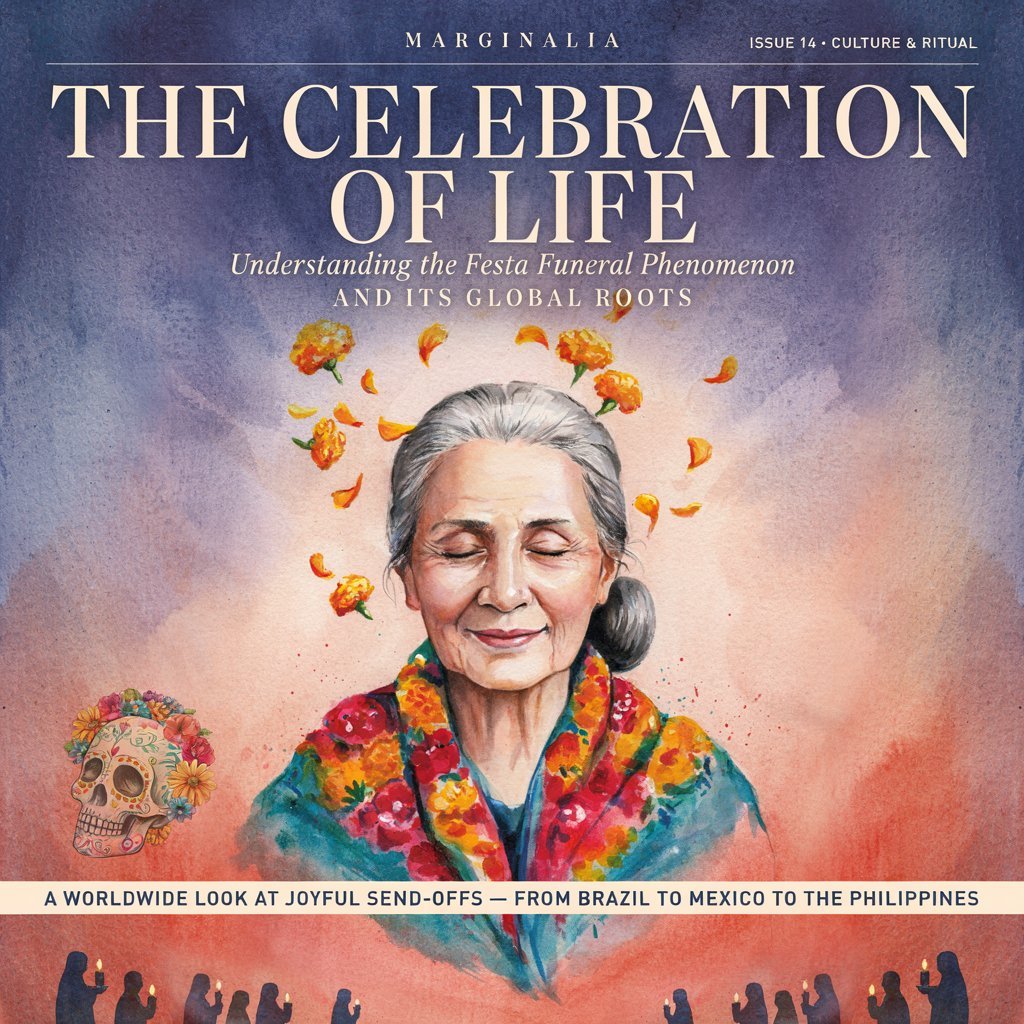
The Celebration of Life: Understanding the “Festa Funeral” Phenomenon and Its Global Roots

Published

on

festa funeral

Introduction

Death is an inevitable part of life, yet how different cultures choose to honor and remember the departed reveals profound insights into their beliefs, values, and relationships with mortality. The concept of a “festa funeral“—a funeral celebration that blends mourning with festivity—might initially seem paradoxical to those accustomed to somber, grief-focused farewells. Yet this practice is far from modern or unusual. Across continents and throughout history, communities have embraced the idea that death deserves not only tears but also celebration, feasting, and even dancing. From the ancient Roman Feralia to contemporary “living funerals” where the guest of honor is still alive, the funeral feast and its celebratory variants represent humanity’s enduring need to find joy, connection, and meaning even in the face of loss. This article explores the rich tapestry of funeral celebrations worldwide, examining why communities choose to feast and celebrate when someone dies, and how this tradition is evolving in the modern era.

The Ancient Roots of Funeral Celebrations

The tradition of feasting at funerals is not a contemporary invention but stretches back to the earliest recorded human civilizations. The ancient Romans dedicated an entire month to honoring their dead, with February being devoted to ceremonies for deceased relatives. The Parentalia, a nine-day period beginning on February 13, involved the temporary closure of temples and suspension of working activities as citizens offered garlands of flowers, grains of wheat, and bread softened with wine to their ancestors. This solemn period culminated in the Feralia, a public feast on February 21 that celebrated the connection between the living and the dead. The following day, families gathered for the Caristia, a private banquet reserved exclusively for living family members in honor of their departed loved ones . These Roman traditions established a template for funeral feasts that would echo through subsequent cultures: the recognition that death is a community event, that the dead deserve remembrance through shared meals, and that ritual feasting serves both spiritual and social purposes.

The ancient Greeks similarly incorporated contests and military games into their funeral rituals, treating the death of notable individuals as an occasion for public spectacle and communal gathering. Germanic tribes, Slavs, and other peoples across Europe developed their own versions of funeral feasts, often combining processions, wailing, and competitive events. The Christian church later adapted these practices, establishing specific feast days for honoring the departed that incorporated elements of the older traditions . This historical continuity demonstrates that the impulse to combine mourning with feasting is deeply embedded in human psychology—a recognition that even in loss, life continues and community bonds must be reinforced.

The Funeral Feast as Spiritual Communion

One of the most significant reasons funeral feasts have persisted across cultures is their spiritual dimension. In many traditions, the food offered at funeral gatherings serves a purpose far beyond nourishing the living. Historians note that from the earliest times, food was placed on graves for the sustenance of the dead in their spiritual state. While casual observers might question how a departed shade could consume physical food, careful examination of these rituals reveals a more nuanced understanding. In many cultures, including parts of Sudan and other regions, ceremonies performed by religious figures were believed to transform the material substance of offerings into a spiritual form that the dead could consume, leaving the material elements to be eaten by the priest and relatives as a means of maintaining communication with their departed loved ones .

This belief in spiritual transformation of food offerings has persisted in various forms. In the Ilocano culture of the Philippines, the practice of “atang” or “halad” involves offering ceremonial food to the dead, including traditional delicacies and the deceased’s favorite dishes. These offerings are served hot because the steam is believed to be what the souls partake in, connecting the living and the dead through the sensual experience of shared food . The Bulgarian custom of feasting in cemeteries on Palm Sunday similarly reflects this understanding, with the remains of good things provided left on graves for the dead. In the Solomon Islands, a portion of food is thrown into the fire during funeral feasts with the invocation, “This is for you,” and even daily meals include a portion set aside for the departed . These practices reveal that funeral feasts are not merely social gatherings but are fundamentally acts of spiritual communion, maintaining relationships that death cannot sever.

The Living Funeral: Celebrating Before the End

Perhaps the most dramatic evolution of the funeral celebration concept is the “living funeral”—a gathering that honors someone who is still alive but facing their final days. This practice has gained significant attention in recent years, exemplified by stories such as Eli McCann’s surprise “funeral” birthday party, arranged by his husband Skylar Westerdahl. When McCann entered a friend’s home expecting a dinner, he found fifteen friends dressed in black, pretending to cry. The service lasted thirty minutes and included a slideshow of photographs, a reading of an obituary written by a friend, and a program for the ceremony prepared with help from his mother. After the “death,” the celebration transformed into a regular party. McCann later described the experience as “perfect” .

The living funeral goes by many names: pre-emptive last rites, pre-funeral, pre-wake wake, living wake, reminiscing party, or last-chapter celebration. Its essence, however, remains consistent: it is fundamentally a festive affair that emphasizes gathering together and celebrating a life before death makes such celebration impossible. Much like a going-away party or retirement party, it provides friends and family an opportunity to shower someone they care about with love, stories, hugs, laughter, and tears while there is still time. Those who have been honored as guests at their own living funerals often describe the experience as invaluable—an opportunity to see people from their past one last time, to feel an outpouring of love from family and friends, and to show appreciation for the care and support they have received over the years. Attendees, in turn, express gratitude for having one last opportunity to express their feelings and share meaningful moments with someone they may not see again while that person is still able to be present and celebrate .

Planning a living funeral typically follows the pattern of a celebration of life, personalized to showcase what the honored person loves, how they live, and what makes them unique. The key difference from a traditional funeral is that the guest of honor is alive and present. Invitations can set a celebratory, uplifting tone through cheerful designs, and the event may feature favorite foods and drinks, curated music playlists, slideshows of old photos, and farewell videos from far-flung friends and relatives. While living funerals can be emotionally intense, participants often find that the opportunity for connection and celebration creates lasting memories and helps ease the pain of the impending loss .

Cultural Variations in Funeral Celebrations

Around the world, diverse cultures have developed unique approaches to funeral celebrations, each reflecting their specific beliefs about death, the afterlife, and community obligations. The Kalash people, who follow a pre-Islamic religion in the remote mountain region of Pakistan’s Khyber Pakhtunkhwa Province, mark death in ways that few on the planet do. Their colorful funeral rituals involve dance, drums, and gunfire, creating an elaborate and expensive celebration of a loved one’s life . This approach emphasizes joy and vitality even in the face of death, reflecting a worldview that celebrates the life lived rather than mourning the loss exclusively.

In the Philippines, the “tumba-tumba” tradition in Paoay, Ilocos Norte, combines solemn ritual with feast-like activities. Residents honor the dead by building makeshift huts called “mallong” adorned with traditional Ilokano tapestries, where catafalques, candles, images of saints, crosses, and photographs of the dead are set up inside. The offerings, which include traditional delicacies and the deceased’s favorite foods, are displayed on a “dulang” or low-legged table. Elderly women gather in front of the offerings with lighted candles and recite prayers and chants for the dead. This practice reflects the Ilocano belief that family bonds remain unbroken even after someone passes away, strengthening the connection between the living and the dead .

The Yaqui people of Mexico and the American Southwest practice an even more elaborate tradition: the cumpleano or luto pahko, a death anniversary fiesta held about a year after death. This ceremony marks the end of the mourning period and involves an all-night fiesta with dancing, feasting, and elaborate rituals. The mourning symbols (black strings or pieces of wool called lu’uta) are placed around the necks of relatives and godparents, and the altar is draped in black. At noon the following day, the mourning is ceremonially removed, and the altar is decorated with bright flowers. The fiesta then begins, featuring traditional dances including the matachin dance society, pascolas, and deer dancers, accompanied by harpists, violinists, and drummers. The celebration involves feeding fifty to over a hundred participants twice—in the evening and early morning—with food cooked over open fires. This tradition demonstrates how funeral celebrations can serve as community events that mark important social transitions while reinforcing cultural identity .

The Modern Shift: From Simplicity to Spectacle

While funeral celebrations have ancient roots, modern practices in some regions have transformed these rituals from simple community gatherings into elaborate spectacles that can last days or even weeks. This shift has sparked considerable debate about whether funeral feasts have lost their original spiritual and social purposes. In Pakistan, for example, commentators have noted a troubling transformation in funeral practices. Earlier, a funeral used to be a simple affair, but that is no longer the case. Watching photographers and teams of videographers documenting funerals is increasingly common, with content then posted on social media. Funeral feasts that once were modest gatherings now last several days or even weeks, often involving extensive preparations, elaborate food, and significant expense .

Critics argue that this transformation represents a departure from the original purpose of funeral rituals. The Arabic verse recited by Muslims at funerals—”Indeed, to the Almighty we belong, and, indeed, to Him we shall return”—serves as a reminder that life is temporary and believers must prepare for the afterlife. Yet instead of focusing on this spiritual preparation, many communities have become preoccupied with the logistics of the funeral and feasts. This shift, driven by cultural influences, rising standards of living, and social pressures, has led some to stop attending funerals altogether. Given that Muslims consider it a social and religious responsibility to participate in funeral prayers and attend the funeral of Muslim brethren, this trend is particularly concerning. The extravagant practices are, in effect, depriving the dead of the prayers of many . This tension between meaningful tradition and performative excess illustrates the challenge of maintaining authentic funeral practices in an era of social media and competitive display.

Planning a Non-Traditional Funeral Celebration

For those seeking to honor a loved one in ways that feel authentic and personal rather than constrained by convention, modern funeral planning offers remarkable flexibility. The most important starting point is reflecting on who the person was—what they did with their free time, where they felt most like themselves, what made them laugh, and what they would have absolutely not wanted. This focus on the individual’s unique character often provides clear direction for the celebration. As experts note, the goal is not a perfect event but something that, when it’s over, people say felt like them .

Non-traditional celebrations can take many forms. An open house format allows people to come and go over several hours, with food, music, and photos available for viewing but no formal program or agenda—ideal for people with wide social circles across different periods of their lives. Themed gatherings built around something the person loved, whether a decade, a place, a hobby, or a sports team, help create a celebratory atmosphere from the start. Outdoor events at parks, backyards, or lakeside spots the person enjoyed can be especially meaningful for those who spent their lives outside. Small dinners with just close family and friends, featuring meals cooked from the person’s recipes, offer intimate and unhurried opportunities for connection. Activity-based gatherings, such as a hike, round of golf, or pub trivia night, get people moving and talking rather than sitting in rows .

Practical considerations for such events include choosing an appropriate venue, which might be private property, a park with a simple permit, a restaurant with private rooms, or a community hall. Timing offers flexibility, with many families waiting two to six weeks after a death to allow out-of-town family to travel and to have enough time to plan something that genuinely reflects the person. Guest communication should be clear and simple, indicating the format and whether people should bring anything. Food can be potluck-style for warmth and personal connection, catered for convenience, or ordered from a favorite restaurant. Music should feature the person’s actual playlists rather than generic background music. Personal touches might include photo displays, memory-sharing moments, having the person’s possessions present in the room, and a simple ritual that acknowledges the loss without requiring a formal ceremony .

Balancing Tradition and Celebration

As funeral practices evolve, families often face the challenge of balancing different expectations and preferences. Not everyone will want a non-traditional gathering, and someone in the family may feel strongly that there should be a more conventional service, a religious component, or a more formal tone. In these situations, the most useful question is often what the person who passed away actually wanted. If they expressed a preference, that usually settles the matter. If not, finding a way to honor different needs without making the event feel like a compromise can help reduce conflict. A gathering can have a moment of religious reflection without being a religious service. A casual format can still include a formal toast. Small concessions that cost nothing can prevent significant conflict. At the heart of all funeral celebrations, whether traditional or modern, should be the shared recognition that the person deserves to be remembered well—a common ground sufficient to build from .

Conclusion

The “festa funeral” represents a profound human response to mortality—the recognition that death, while a loss to be mourned, is also an opportunity to celebrate a life, strengthen community bonds, and maintain connections with those who have passed. From ancient Roman feasts to contemporary living funerals, from Kalash drumming and dancing to Ilocano food offerings, the tradition of celebrating the departed through feasting, gathering, and ritual reflects humanity’s enduring need to find meaning in loss. The current transformation of funeral practices, marked by elaborate spectacles and extended celebrations, presents both opportunities and challenges. While personalization and creativity can make funerals more meaningful, there is a risk that performative excess may distract from the spiritual and communal purposes these rituals originally served. Ultimately, the most authentic funeral celebrations are those that genuinely reflect the person being honored, bringing together their loved ones to share memories, offer support, and reaffirm that even death cannot sever the ties that bind us.

Frequently Asked Questions

What exactly is a “festa funeral”?
A “festa funeral” refers to any funeral or memorial gathering that incorporates elements of celebration, festivity, and joy alongside mourning. This can include feasting, music, dancing, and other festive activities that honor the life of the deceased. The practice has ancient roots and appears in various forms across cultures worldwide .

What is a living funeral?
A living funeral is a memorial-style celebration held for someone who is still alive but facing their final days. Also called a pre-wake, reminiscing party, or last-chapter celebration, it allows friends and family to express their love, share memories, and say goodbye while the person can still participate and appreciate the outpouring of affection .

Why do people have funeral feasts?
Funeral feasts serve multiple purposes across cultures. Historically, they were believed to provide nourishment for the deceased in the afterlife, while the material food was consumed by mourners to maintain connection with the departed. They also serve social functions, bringing communities together to support the bereaved, honor the deceased, and reinforce cultural identity .

How do different cultures celebrate funerals?
Cultural funeral celebrations vary widely. The Kalash people of Pakistan incorporate dance, drums, and gunfire into their rituals. Ilocano Filipinos build elaborate huts with food offerings and chant prayers. The Yaqui people of Mexico and the American Southwest hold year-long mourning ceremonies culminating in an all-night fiesta with traditional dances. Ancient Romans had a month dedicated to funeral ceremonies ending with public feasts .

Are funeral celebrations becoming more common?
Modern funeral celebrations have become increasingly elaborate in many regions, with events lasting days or even weeks. This shift has sparked debate about whether these practices honor the deceased or become performative spectacles that distract from the spiritual purposes of mourning. The trend is influenced by rising standards of living, social media, and cultural changes .

Can a funeral be a celebration without being disrespectful?
Absolutely. Many cultural traditions demonstrate that celebration and mourning can coexist meaningfully. The key is ensuring the celebration authentically reflects the person being honored, respects family preferences, and maintains the dignity of the occasion. A celebration of life can include laughter, music, and joy while still acknowledging the sadness of loss .

What are the benefits of a non-traditional funeral celebration?
Non-traditional celebrations allow families to create deeply personal tributes that reflect the individual’s unique character. They can be more accessible and comfortable for guests, allow greater creativity in honoring the person’s life, and often provide meaningful opportunities for sharing memories and supporting one another. Many find these celebrations more healing than

Continue Reading

Entertainment

Mastering the Chaos: The Ultimate Guide to Jungle Ball

Published

on

Mastering the Chaos: The Ultimate Guide to Jungle Ball

The term “Jungle Ball” evokes a specific image—one of unbridled chaos, raw athleticism, and a complete departure from the structured, rule-bound world of traditional sports. It’s a name that has been adopted by various activities, from a brutal, no-fouls-allowed version of basketball played in driveways, to a freewheeling style of volleyball practiced by casual players on the beach, and even as the name for a colorful infant toy designed for sensory exploration. This article serves as the definitive guide to understanding “Jungle Ball” in all its forms. We will dissect the phenomenon, from its origins as a rough-and-tumble street game to its modern iterations, analyzing the core appeal of a game where the only real rule is that there are no rules. Whether you’re a nostalgic player looking to relive the glory days or a parent searching for the perfect developmental toy, this comprehensive guide will explain why the concept of “Jungle Ball” remains a cultural touchstone for unstructured play.

The Origins and Cultural Roots of “Jungle Ball”

To truly understand what “Jungle Ball” is, one must look to its roots in grassroots sports. Historically, “Jungle Ball” emerged in informal settings like schoolyards, outdoor courts, and neighborhood streets. It was the game you played when you didn’t have a referee or even a full understanding of the official rulebook. The term itself is often associated with basketball, where the game devolved into a physical, free-for-all. One account describes it as a game where you could “grab a guy by the shoulders or wrap him up until he let go of the ball” . This wasn’t a game for the faint of heart; it was a crucible for developing toughness, creativity, and the ability to make a basket through contact.

This version of the game often evolved from other street games like “21,” where players competed individually, and the only way to win was to score exactly 21 points . The aggression of “Jungle Ball” was an antidote to the frustration of playing by restrictive rules, allowing players to settle disputes physically. It’s essential to note that, despite its name, the term is not meant to be a racial epithet, but rather a description of a chaotic playing style and environment where the game is as wild as the jungle itself . This understanding is crucial to appreciating its place in sports culture as a descriptor of pure, unadulterated competition.

Jungle Ball in Modern Sports: Basketball and Volleyball

In the modern sporting lexicon, “Jungle Ball” has become a shorthand for a specific style of play in basketball and volleyball. In basketball, the term describes a game with no fouls, where physicality is the norm. It is often a game of “me first” basketball, where passing is rare and the primary objective is to drive to the hoop at all costs . This version highlights the “anything goes” mentality, stripping the game down to its most fundamental elements of scoring and defense. The narrative often involves football players channeling their aggression into the sport, as the physical contact resembles the gridiron more than the hardwood .

In volleyball, the definition shifts slightly but maintains the core concept of rulelessness. Here, a “Jungle Ball” game is typically played by inexperienced players who prioritize having fun over strategy . The play is often static or erratic, lacking the structured pass-set-hit rhythm of professional volleyball. Players may have a “me-first” attitude, and the game can become chaotic and occasionally dangerous as multiple players converge on the ball without a defined plan . Synonyms for this type of play include “picnic ball” or “barbeque ball,” emphasizing the laid-back, recreational context where skill takes a backseat to enjoyment .

The Digital Jungle: Jungle Ball in Video Games

The chaotic spirit of “Jungle Ball” has even found its way into the digital realm. In the popular mobile game Brawl Stars, “Jungle Ball” is the name of an official map for the Volley Brawl event. This map is characterized by its dense bushes and clusters of walls, providing cover and creating a tactical, albeit chaotic, environment . The very design of the map encourages ambushes and close-quarters combat, mirroring the unpredictability of the real-world game. The use of the term in this context is a direct nod to the hectic, rule-bending nature of the original, translating it into a digital format where players must navigate obstacles and enemies to score.

Additionally, the phrase has been used for a puzzle game titled Jungle Ball Lite: Tilt & Draw, where players help a monkey retrieve a ball from bullies by tilting their device to guide the ball through obstacles . While this game focuses more on physics and puzzles, the title “Jungle Ball” still suggests a challenging adventure through a dangerous, untamed environment. This demonstrates how the term has become synonymous with a form of “controlled chaos” where the player must overcome significant obstacles—be they other players in a brawl or spikes in a jungle.

The Gentle Side: Jungle Ball as an Infant Toy

Contrasting sharply with the aggressive, full-contact nature of the sport, “Jungle Ball” is also a widely recognized term for a line of baby toys. These are not about tackling or scoring but about sensory development and motor skills. One of the most common products features a ball made of natural rubber with colorful, jungle-themed designs, specifically sized at 18-20 cm for little hands . These toys are ideal for infants aged 6 months and up, designed to be lightweight and easy to grasp. They stimulate hand-eye coordination, encourage crawling and walking, and feature vibrant colors and patterns to captivate the baby’s attention .

Other variants of these toys are even more interactive, featuring lights, sounds, and movable parts like sliding beads or pop-up animals . These activity balls serve as educational centers, teaching children about animals, colors, and cause-and-effect relationships. This version of “Jungle Ball” is rooted in safety and development. Its simplicity is its strength, allowing for “hours of game play” in a safe, controlled environment . This stark contrast between the aggressive street game and the gentle infant toy highlights how the term has evolved to describe a product that is “perfectly adapted for babies’ first discoveries” .

Conclusion

The term “Jungle Ball” represents a fascinating linguistic and cultural duality. On one hand, it signifies the raw, unfiltered, and often brutal style of play found in street basketball and casual volleyball—a rejection of structured rules in favor of pure, physical competition . It embodies a “me-first” attitude and a “no rules” environment that, while chaotic, builds a unique form of athletic resilience and camaraderie. On the other, “Jungle Ball” has been adopted by the toy industry to represent gentle, colorful, and developmentally essential play for infants, promoting motor skills and sensory awareness in a safe and loving way .

Ultimately, “Jungle Ball” is about play in its most fundamental form. Whether it’s the high-stakes chaos of a playground pickup game or the innocent wonder of a baby discovering a new toy, the term captures the essence of engaging in an activity for the sheer joy of it. It is a testament to the versatility of play and how one phrase can bridge the gap between the most physical forms of recreation and the gentlest forms of early childhood development. No matter which version you are referring to, “Jungle Ball” is about embracing the game, whatever form it may take.

Frequently Asked Questions (FAQ)

Q1: What is “Jungle Ball” in basketball?

A: In basketball, “Jungle Ball” refers to an informal, highly physical style of play where fouls are rarely called and rules are largely ignored. It is often a “me-first” game with little passing, emphasizing aggressive drives to the basket and physical defense .

Q2: Is “Jungle Ball” a racial term?

A: No, while the term has a complex history, it is widely understood to describe a chaotic style of play rather than being a racial epithet. It refers to the “wild” or untamed nature of the game, similar to how one might describe a chaotic situation .

Q3: What is “Jungle Ball” in volleyball?

A: In volleyball, “Jungle Ball” is a term for a recreational game played by inexperienced players. It typically lacks structured strategy, with players often acting individually rather than as a cohesive team. It is sometimes called “picnic ball” or “barbeque ball” .

Q4: Is there a baby toy called “Jungle Ball”?

A: Yes, there is a popular line of “Jungle Ball” toys for infants. These are typically lightweight, colorful inflatable balls (around 18-20 cm in diameter) designed to help babies develop motor skills, hand-eye coordination, and sensory awareness .

Q5: What age is the “Jungle Ball” baby toy suitable for?

A: The “Jungle Ball” infant toy is generally recommended for babies aged 6 months and older. Its size and lightweight construction make it easy for little hands to grasp and manipulate safely .

Continue Reading

Entertainment

Unlock the Excitement: Your Ultimate Guide to the “93.3 Contest”

Published

on

Unlock the Excitement: Your Ultimate Guide to the "93.3 Contest"

The airwaves crackle with anticipation, a familiar voice teases an upcoming giveaway, and for a moment, the daily routine is interrupted by the promise of a prize. For decades, radio stations have used contests not just as a promotional tool, but as a way to build a loyal community, rewarding listeners for their engagement and loyalty. Among the most iconic frequencies in this landscape is the 93.3 FM band—a signal that carries a variety of formats and a tradition of exciting listener competitions across the United States and beyond. Whether it’s for concert tickets, a significant cash prize, or a life-changing experience, the “93.3 contest” has become a byword for opportunity and excitement.

This article serves as your definitive guide to the world of the “93.3 contest.” We will delve into the mechanics of how these radio station competitions work, decode the official rules that govern them, and explore why they are a cornerstone of the listener experience. From the classic “caller number nine” to complex online entry systems, we will cover the strategies for participation and what you can expect if you are fortunate enough to be declared a winner. This is more than just a guide; it is your backstage pass to understanding the thrilling universe of radio contests, helping you navigate the process from the initial announcement to claiming your prize.

Decoding the “93.3 Contest”: A Comprehensive Analysis

The phrase “93.3 contest” is a gateway to a diverse array of promotions and competitions, each designed to foster a unique connection between the radio station and its audience. While the specific station (such as KUBE 93.3 in Seattle or STAR 93.3 in Cincinnati) may vary, the core principles and rules governing these contests are remarkably consistent across the industry. Understanding these fundamental elements is the first step toward becoming a successful participant.

The Core Mechanics of Radio Contests

At its heart, a radio contest is a promotional event governed by a set of official rules that ensure fairness and legal compliance. These rules, often referred to as the Official Rules and Regulations, are legally binding documents that all entrants implicitly agree to by participating. A key pillar of almost every contest is the “No Purchase Necessary” rule. This ensures the contest is a game of chance or skill, not a lottery, and that purchasing a product or service will not increase your odds of winning. The Eligibility and Limitations section is another crucial component, often stipulating that participants must be legal residents of the United States, reside within the station’s specific broadcast or survey area, and meet a minimum age requirement, which is frequently 18 years or older.

The methods of entry for a “93.3 contest” are as varied as the prizes themselves. The traditional approach is the call-in contest, where a listener must be a specific caller—for instance, the 10th caller—to win. This method is immediate, high-energy, and a staple of morning shows. In the digital age, many radio stations have expanded to online entries through their websites or mobile apps, often requiring users to create an account. Some stations even incentivize app usage by rewarding listeners who engage with the online stream for a set number of hours, giving them an entry into a contest as a “listening reward”. Stations like STAR 93.3 in Cincinnati highlight their contests alongside other features like their music, prayer wall, and blogs within their mobile app, positioning the contest as part of a broader digital experience.

Strategies for Success: How to Play and Win

Winning a radio contest often involves a combination of persistence, knowledge of the rules, and a bit of luck. For on-air contests, timing is everything. Listeners frequently find success by listening intently for the cue to call and being persistent if they get a busy signal. A common strategy is to use speed dial or to have multiple phones ready to increase the chance of getting through. For online contests, the strategy shifts to consistency. If a contest allows one entry per day, the most dedicated participants will make it a daily ritual to log in and enter. Some contests provide additional entries for performing actions like sharing on social media or visiting a sponsor’s page, so savvy entrants take advantage of every available opportunity.

Understanding the restrictions is just as important as knowing how to enter. Most stations enforce a winner frequency rule. This means that if you win a contest, you and members of your household are often ineligible to win another prize from the same station for a set period—commonly 30 days. For larger prizes valued over a certain amount, such as $1,000, this restriction can extend to 60 days or even a full year. By familiarizing yourself with these rules, you can manage your expectations and focus your efforts on contests where you have a real chance to win.

Claiming Your Prize: A Guide for Winners

The experience of winning is exhilarating, but the process of claiming the prize is a critical step that requires prompt action. Once a winner is selected, they are usually notified by phone or email. It is vital to respond to this initial notification quickly, as many stations have a strict deadline—often just 3 days—to confirm your win; failure to do so typically results in forfeiture of the prize and the selection of an alternate winner. The station will then guide you through the verification process, which may include completing an Affidavit of Eligibility and Liability/Publicity Release, and for prizes valued at over $600, providing a W-9 tax form, as winners are responsible for all applicable taxes.

Physical prize pickup is a straightforward but regulated procedure. Winners usually must visit the station’s business office during designated business hours, which are often Monday to Friday from 8:30 am to 5:00 pm, to present a valid, government-issued photo ID. The rules on who can pick up a prize are strict; only the named winner is authorized to claim it, and stations generally prohibit prizes from being collected by spouses, partners, or friends. Once the verification is complete and the paperwork is signed, the prize is handed over, cementing the listener’s connection to the station and creating a positive, memorable experience that encourages continued loyalty. This entire process, from the initial announcement to the final handshake at the station, is meticulously designed to be fair, transparent, and rewarding for all involved.

Frequently Asked Questions (FAQ)

What is the most common way to enter a 93.3 contest?
The entry methods vary, but the most common ways are either by being a specific caller (e.g., the 9th caller) during an on-air cue, or by entering online through the radio station’s website or mobile app.

Do I need to buy something to win?
No. All legitimate radio contests are governed by a “No Purchase Necessary” rule, which means you do not have to buy anything to enter or win, and making a purchase will not increase your odds of winning.

Can I win if I live outside the city where the station is located?
Eligibility is often restricted to residents of the station’s specific broadcast or survey area. Check the official rules of the particular contest to confirm geographic restrictions.

What happens if I win a big prize, like a car or a large cash sum?
Winners of prizes valued over $600 will typically need to provide a W-9 tax form and will be responsible for reporting the prize as income and paying any applicable taxes. You will also have to sign official affidavits and releases.

What is the 30-day rule in radio contests?
The 30-day rule is a common restriction that prevents you and your household members from winning another prize from the same radio station within 30 days of a previous win. This rule is designed to give more listeners a chance to win.

I missed the call notifying me I won. What should I do?
Prompt response is critical. If you do not respond to a winner notification within the time specified in the rules (often 3 days), you may forfeit the prize, and the station will select an alternate winner.

Conclusion

The “93.3 contest” represents more than just a chance to win a prize; it is a dynamic interaction that lies at the heart of the radio experience. From the spontaneous excitement of being a winning caller to the strategic, daily engagement of an online contest, these promotions create a powerful bond between the station and its audience. They are meticulously structured with clear rules to ensure fairness, protect all parties, and maximize listener engagement. By understanding the core mechanics—how to enter, the common restrictions like the 30-day rule, and the steps required to claim a prize—you can participate with confidence and increase your chances of experiencing the thrill of winning.

Ultimately, whether you are tuning in for the music, the personality of the DJs, or the chance to win the next big giveaway, participating in a “93.3 contest” is an exciting way to become an active part of the radio community. It transforms passive listening into an interactive and potentially rewarding experience. So, the next time you hear a teaser for a contest on the radio, you will be equipped with the knowledge and strategies to seize the opportunity. Listen closely, read the rules, and you might just find yourself on the receiving end of a life-changing call.

Continue Reading

Entertainment

Tubehalote: The Ultimate Guide to This Multifaceted Trend

Published

on

Tubehalote: The Ultimate Guide to This Multifaceted Trend

The internet is a vast and ever-evolving ecosystem, a place where new terms, platforms, and ideas emerge with dizzying speed. One such term that has recently begun to surface across various corners of the web is “tubehalote.” A quick search reveals a fascinating and somewhat confusing picture: it’s a word attached to drastically different concepts, from a unique architectural and interior design philosophy to a niche blogging website, and even speculation about a digital platform. This guide aims to unravel the mystery of tubehalote, exploring its various identities, core functionalities, user experiences, and why understanding this multifaceted term is becoming increasingly relevant in 2026. Whether you are a design enthusiast looking to transform your living space, a curious internet user who stumbled upon the term, or someone seeking practical, everyday information, this comprehensive article will provide the clarity you need.

The Many Faces of Tubehalote

The first challenge in understanding tubehalote is acknowledging that it is not a single entity but rather a name that represents at least two distinct and unrelated concepts. This duality is crucial to grasp, as encountering the term in one context will mean something entirely different in another. On one hand, tubehalote is being championed as a forward-thinking, eco-conscious architectural and interior design style that seeks to harmonize our living spaces with nature . On the other, it is the name of a small, straightforward blogging website dedicated to publishing short, accessible articles on topics like men’s fashion, business, and health . Additionally, some sources have described it as a potential or emerging digital platform, though this remains unconfirmed and speculative .

This divergence in meaning is what makes the term so intriguing. It serves as a perfect example of how a single word can acquire different meanings in different niches. For the purpose of this guide, we will dissect each major interpretation, examining its specific attributes, features, and the value it offers to its respective audience. By the end, you will be able to identify exactly which “tubehalote” is being referred to in any given situation, and understand the unique world each one represents.

Tubehalote: The Vision of Eco-Friendly Design

For homeowners, interior designers, and architecture enthusiasts, tubehalote represents a refreshing and meaningful design philosophy. This interpretation of tubehalote is less about a specific product and more about a holistic approach to creating living environments that are both beautiful and sustainable. It is an architectural style that prioritizes an organic aesthetic, bringing the outdoors inside through the thoughtful use of natural materials, curved forms, and living elements . The core idea is to turn a house into a sanctuary that not only reduces its environmental impact but also nurtures the well-being of its occupants through a deeper connection with nature. This is not merely a fleeting trend but a thoughtful response to a growing global desire for sustainability and a return to authentic, grounding spaces.

Core Elements and Practical Implementation

The philosophy of tubehalote design is built upon several key pillars that work in harmony to create its distinctive look and feel . The foundation lies in the use of natural materials such as wood, stone, clay, and bamboo, which are chosen not only for their visual warmth and texture but also for their lower carbon footprint. This is complemented by the integration of organic shapes; instead of rigid, straight lines, the design favors curved roofs, arched doorways, and flowing wall designs that mimic the soft contours of the natural world. Perhaps the most distinctive feature is the seamless integration of living elements. Plants are not just decorative accessories in this style; they are an integral part of the structure itself, with vertical gardens, indoor planters, and green walls purifying the air and adding vibrant life to rooms .

Adopting this style in your own home can be a gradual and highly rewarding process. For those on a budget or just beginning to explore the aesthetic, starting with small changes can have a significant impact. Painting walls in earthy terracotta, sage green, or warm brown tones can instantly shift the mood of a room . Switching out synthetic textiles for throws and cushions made from natural fibers like linen or cotton adds a layer of organic texture. Incorporating more plants, especially air-purifying varieties like snake plants or pothos, is a simple and cost-effective way to embrace the ethos of the style. For larger projects, one might consider installing reclaimed wood shelving, replacing a countertop with a sustainable stone option, or even investing in a small living wall . The ultimate goal is to create spaces that feel calm, connected to nature, and personally meaningful.

Tubehalote: The Simple Blogging Website

In stark contrast to the design philosophy, tubehalote also refers to a very real, albeit modest, blogging website found at tubehalote.com. This platform is the polar opposite of a complex design movement; it is a simple, no-frills content hub designed for quick, easy reading . It focuses on publishing short, accessible articles on everyday topics, making it a go-to resource for individuals who want practical information without wading through lengthy, complex articles. Its primary appeal lies in its efficiency and straightforwardness, catering to a modern audience with limited time and a need for clear, concise answers. The content is curated to be beginner-friendly, covering a range of high-interest lifestyle categories.

Functionality and User Experience

The user experience on the Tubehalote blog is centered on simplicity and speed. The site is described as having a clean layout with a search box at the top and a simple category menu, allowing users to quickly find the information they need . The content itself is written in short sentences and often uses bullet points, designed to help readers “finish fast and remember the tips.” There is no requirement for users to log in to read the majority of posts, lowering the barrier to entry and making all information freely available. The design is also optimized for mobile devices, which is essential for users who browse on their phones with potentially slower data connections.

From a user’s perspective, the platform offers several notable pros and cons. On the positive side, readers consistently praise the ease of reading, the clear language, and the fast page-loading times . The minimal use of advertisements creates an uncluttered reading experience. Users have specifically mentioned appreciating the practical fashion tips, health advice for busy days, and basic business ideas offered on the site. However, the platform also has limitations. The information provided is consistently described as staying at a “basic” level, which means it is not suitable for those seeking in-depth, expert-level analysis. The small team of writers means the content may not be as diverse or frequently updated as on larger platforms, and the lack of interactive features like a comment section prevents the formation of a community around the content .

Tubehalote: The Unconfirmed Digital Platform

A third interpretation of tubehalote emerges from several online discussions and articles that describe it as an emerging or lesser-known digital platform, possibly related to content sharing, video streaming, or entertainment . However, unlike the concrete examples of the design style and the blogging website, this identity is far more ambiguous. Sources consistently note that there is “limited verified information” available, and its exact purpose, ownership, and functionality remain unclear. It is often described as a “developing or ambiguous digital entity” that reflects the ever-expanding and sometimes unverifiable nature of the internet .

This lack of definition is, in itself, a significant point of information. The articles speculating about a Tubehalote platform often caution users to approach it with care, emphasizing the need to verify its authenticity, security measures, and privacy policies before engaging with it . This warning suggests that while the concept might be an attempt to capitalize on the popularity of other digital services, it has not yet established a credible or trusted presence. For now, this version of tubehalote remains a cautionary tale about the importance of digital literacy and not engaging with websites that have not been thoroughly vetted. It is advisable for users to be wary of links or prompts related to an unverified “Tubehalote” platform.

Conclusion

The term “tubehalote” serves as a fascinating case study in the multifaceted nature of the modern internet. As we have explored, it can mean one of several very different things depending on the context. For the design-conscious individual, it represents a beautiful and sustainable architectural philosophy that brings nature into the home through organic shapes and natural materials . For someone looking for quick, practical advice on fashion or business, it is the name of a simple, user-friendly blogging website that delivers easily digestible content . And for the cautious internet user, it acts as a reminder of the many unverified and potentially speculative entities that can surface online .

Understanding which “tubehalote” is being referenced is the key to finding value in the term and avoiding confusion. The eco-design movement offers a profound and actionable way to improve our living spaces and environmental footprint. The blogging site provides a convenient resource for quick, everyday answers. Meanwhile, the potential digital platform highlights the importance of verifying online sources before engagement. The diversity of meanings behind a single word underscores the dynamic, chaotic, and wonderfully varied landscape of the internet, where a new term can simultaneously be a design philosophy, a website, and a mystery. By exploring each facet, we gain not only a better understanding of “tubehalote” but also a broader appreciation for the different ways we interact with information and ideas in the digital age.

Frequently Asked Questions (FAQs)

Q1: What is the most common meaning of “tubehalote”?

A: The term has two primary and equally common meanings. It refers to a specific eco-friendly architectural and interior design style that uses natural materials and organic shapes, and it is also the name of a simple blogging website (tubehalote.com) that publishes short articles on lifestyle topics .

Q2: Is Tubehalote a video streaming platform like YouTube?

A: No. Despite some unconfirmed speculation describing it as a potential digital platform or content hub, there is no evidence of a widely recognized video streaming service by this name. The two confirmed identities are a design philosophy and a blogging website .

Q3: How can I incorporate Tubehalote design into my home on a budget?

A: You can start small by painting walls in earthy tones like terracotta or sage green, adding plants, and swapping synthetic textiles for natural fiber throws and cushions. These simple changes can significantly shift the feel of a room without a major investment .

Q4: Is the Tubehalote blog a reliable source of in-depth information?

A: The Tubehalote blog is reliable for what it is: a source for quick, basic, and easy-to-read tips and news. It is best for beginners and casual readers. However, it does not provide the in-depth, expert-level analysis that some users may be looking for .

Q5: What should I do if I see a link or download related to an unknown “Tubehalote” digital platform?

A: If you encounter a link for a “Tubehalote” digital platform that is not the blogging website or design style, you are advised to be very cautious. Verify its authenticity and security before interacting with it, as its purpose is unconfirmed and may not be safe .

Continue Reading

Trending