
Food
Gravity Points: The Brewer’s Essential Measure of Strength and Potential

Published
3 months agoon

Table of Contents
ToggleBrewing is a craft of precision, where small differences in measurement can dramatically alter the final character of your beer. Among the most fundamental yet frequently misunderstood concepts in brewing is the measurement known as gravity points. Whether you are a beginner learning to brew your first batch, a seasoned homebrewer refining your recipes, or a professional striving for consistency, understanding gravity points is not just helpful—it is essential.
In the simplest terms, gravity points allow you to quantify the potential of your wort. This measurement provides the critical link between your raw ingredients and the finished beer’s alcohol content, body, and balance. By mastering this concept, you gain the ability to design recipes with confidence, accurately predict your results, and troubleshoot issues before they become problems.
This comprehensive guide will delve into the world of gravity points, from the fundamental definitions and essential calculations to advanced applications like brewing high-gravity beers. You will learn the science behind the numbers and develop the practical skills needed to use this knowledge in your own brewing.
What Are Gravity Points? The Language of Wort Strength
Specific gravity (SG) is a standard measurement used to describe the density of a liquid relative to pure water. In brewing, this density is directly related to the concentration of sugars and other dissolved solids in the wort. A standard hydrometer reading, such as 1.050, indicates that the wort is 5% denser than water. To simplify these figures, homebrewers and professionals alike use a shorthand known as “gravity points.”
Gravity points are simply the three digits following the decimal point in a specific gravity reading. For instance, an original gravity (OG) of 1.050 is said to be “50 points,” while a wort with an OG of 1.080 is “80 points”. This conversion makes calculations and communication far more manageable. A quick and useful rule of thumb for estimating the relationship between gravity points and the Plato scale commonly used in the industry is that points divided by four gives an approximate Plato measurement; for example, 50 points are roughly equivalent to 12.5 °P.
Understanding gravity points is crucial because they form the basis for all your recipe planning and fermentation monitoring. You will use them to calculate everything from how much malt you need to the potential alcohol level of your final beer.
The Foundation of Calculations: Points Per Pound Per Gallon (PPG)
The cornerstone of recipe design is the concept of Points per Pound per Gallon (PPG) . This metric represents the potential gravity that one pound of a given fermentable ingredient will contribute when dissolved in one gallon of water. It’s a standardized rating assigned to each ingredient, allowing brewers to predict a recipe’s strength.
For example, a typical base malt might have a yield potential of 1.036, meaning it has a PPG rating of 36. This means that at 100% efficiency, one pound of this malt in one gallon of water would produce a wort with a specific gravity of 1.036.
Extracts also have standard PPG values. Liquid malt extract (LME) generally contributes around 36 points per pound per gallon, while dry malt extract (DME), being more concentrated, contributes about 45 points. These figures simplify recipe creation for extract brewers, as the extraction process has already been done for them. When steeping specialty grains, the contribution is lower—often estimated at around 50-60% of their potential—and must be calculated accordingly to avoid overestimating the final gravity.
These PPG values are what make gravity points such a powerful tool for the brewer. They provide a consistent language to compare fermentables and build recipes with predictable results.
How to Perform Gravity Point Calculations
With a grasp of the principles, you can apply gravity points to practical brewing calculations. The key is that the total gravity points in a recipe are distributed across the final volume, making the calculations scalable. You can use this in two primary ways: predicting the gravity of a new recipe based on its ingredients, and determining how much of an ingredient to add to achieve a target gravity.
Calculating Original Gravity from a Recipe
This method answers the question: “If I use these ingredients, what will my OG be?” To calculate the estimated original gravity, you first find the total gravity points from all your fermentables, then divide by your batch volume (in gallons). This yields the gravity points, which you then convert back to a specific gravity reading.
Here is a step-by-step example for a 5-gallon batch:
Step 1: Define Your Grain Bill
8 lbs of Pale Malt (potential of 36 PPG)
1 lb of Crystal Malt (potential of 34 PPG, but with a steep efficiency of ~50%)
Step 2: Calculate Total Gravity Points
For the Pale Malt: 8 lbs * 36 PPG = 288 points
For the Crystal Malt: 1 lb * (34 PPG * 0.5 efficiency) = 17 points
Total Points = 288 + 17 = 305 points
Step 3: Calculate Estimated Original Gravity
Divide the total points by your batch volume: 305 points / 5 gallons = 61 points
The estimated OG is therefore 1.061.
This calculation assumes a brewhouse efficiency, which reflects how well you extract sugars from the grain. While this is always a factor in all-grain brewing, it’s not a perfect 100% system, a reality that every brewer must learn to manage.
Adjusting for Brewhouse Efficiency in All-Grain Brewing
The previous calculation for the Pale Malt assumed 100% efficiency, which is impossible to achieve in an all-grain system. Every system is different, and a common starting point for brewhouse efficiency is around 70-75%.
To create a realistic recipe, you must adjust your total points by your estimated efficiency. In the earlier example, if your system operates at 72% efficiency, the actual points contributed by the Pale Malt would be (8 lbs * 36 PPG) * 0.72 = 207.4 points, not 288. By accounting for this, you can accurately predict your final gravity and avoid consistently falling short of your target.
Calculating Ingredient Amounts to Hit a Target Gravity
Sometimes, you know the gravity you want and need to figure out how much ingredient to use. This is simply the reverse of the previous process.
Calculating for a 5-Gallon Batch of 1.040 OG with DME:
Step 1: Determine Total Gravity Points Needed
Target gravity in points: 40 points
Total points for 5 gallons: 40 points * 5 gallons = 200 total points
Step 2: Account for Your Ingredient’s PPG
DME has a PPG of about 45.
Amount of DME needed: 200 total points / 45 PPG = 4.44 lbs.
This tells you that 4.44 pounds of DME in a 5-gallon batch will yield a beer with an OG of approximately 1.040.
The Total Gravity Points Approach for Recipe Scaling
Another powerful method involves thinking in terms of total gravity points for the entire batch. This approach is particularly useful when scaling recipes or adding extra fermentables to a beer already in progress.
The concept is simple: every batch of beer has a specific total number of gravity points, which is the product of its volume and its gravity reading. For instance, a 5-gallon batch with an OG of 1.050 has a total of 50 points * 5 gallons = 250 total gravity points.
This method is invaluable for “feeding” a fermentation. If you want to add a sugar syrup to a 5-gallon, 1.050 beer, you can calculate its impact as follows:
Step 1: Determine Existing Total Points
50 points * 5 gallons = 250 points
Step 2: Calculate Points from Addition
If you add a 1-pound sugar syrup (which has 46 PPG) dissolved in 0.25 gallons of water.
Points from sugar: 1 lb * 46 PPG = 46 points
Step 3: Calculate New Total Points and OG
New total points: 250 + 46 = 296 points
New total volume: 5 + 0.25 = 5.25 gallons
New OG in points: 296 points / 5.25 gallons = 56.4 points (or 1.056)
This demonstrates how a sugar addition can increase the alcohol potential of your beer, a common practice in styles like Belgian Tripels.
Brewing High-Gravity Beers: The Big Challenge
Gravity points take on a whole new level of importance when brewing “big” beers, typically those with an OG above 1.080. These beers present a unique set of challenges that can make or break a brew day if not properly managed.
The Efficiency Drop
The most significant challenge in high-gravity brewing is the drop in brewhouse efficiency. A system that consistently hits 72% efficiency for a 1.050 beer might drop to 50-60% when brewing a 1.080 imperial stout. This is because you are using a much larger grain bill with the same amount of water to produce the same volume of wort. The sparge process is less effective at rinsing sugars from a massive pile of grain, leaving a higher proportion of sugars trapped in the mash tun. To compensate, brewers often need to add more grain or augment the brew with malt extract to reach their target gravity.
Yeast Management is Critical
A high-gravity wort is an osmotic and alcoholic stress test for yeast. The sheer density of the wort makes it difficult for yeast cells to function, and as fermentation progresses, they face a toxic environment of increasing alcohol. To avoid a stuck fermentation that leaves the beer cloyingly sweet, brewers must focus on yeast health.
Key strategies include:
Pitching an Adequate Amount of Yeast: The standard rule of thumb is about 0.007 vials or packs per gallon per gravity point for ales, and about 0.015 for lagers, which require roughly double the amount. For a 5-gallon batch of 1.080 ale, this would be 0.007 * 80 points * 5 gallons = 2.8 packs of liquid yeast. A massive, healthy starter is essential.
Providing Ample Oxygen: Yeast needs oxygen to build healthy cell walls and multiply. For a big beer, a single shake of the fermenter is insufficient. Use pure oxygen or a long aeration period to ensure the yeast has the resources it needs for a vigorous start.
Controlling Fermentation Temperature: The exothermic nature of fermentation can cause the temperature of a high-gravity beer to spike, producing harsh fusel alcohols. Pitch your yeast at the lower end of its recommended temperature range to prevent this and allow for a slow, clean fermentation.
Adding Yeast Nutrient: Supplementing your wort with yeast nutrients like zinc and vitamins can provide additional support for stressed yeast cells, helping them complete the fermentation process.
Conclusion
Gravity points are far more than just the numbers on a hydrometer; they are the fundamental language of brewing measurement. They provide a simple yet powerful framework for understanding your beer’s potential. By learning to think in terms of gravity points, you unlock the ability to move beyond following recipes to truly designing them.
You can now visualize the contributions of each ingredient, understand the implications of your brewhouse efficiency, and adjust your process for any style, from a delicate session ale to a massive, high-gravity imperial stout. The calculations are accessible and practical, giving you the data you need to make informed decisions on brew day.
Ultimately, mastery of gravity points leads to consistency. It allows you to troubleshoot problems, replicate your successes, and, most importantly, brew the beer you set out to make. With this knowledge, your brewing process becomes more precise, your confidence grows, and your final product improves with every batch.
Frequently Asked Questions (FAQs)
1. What is the difference between Specific Gravity and Gravity Points?
Specific gravity is the absolute density measurement of a liquid relative to water (e.g., 1.050). Gravity points are a simplified way to express that number by taking the last three digits after the decimal point. In this example, that would be 50 points.
2. What do the PPG values for LME and DME mean?
PPG stands for Points per Pound per Gallon. For Liquid Malt Extract (LME), the value is approximately 36, meaning one pound of LME in one gallon of water will produce a gravity of 1.036. Dry Malt Extract (DME) has a higher value, about 45, because it is more concentrated.
3. How can I calculate my brewhouse efficiency?
After brewing, measure your actual original gravity in points. Then, calculate the “potential gravity” of your grain bill (weight in lbs * PPG). Your efficiency is the actual points divided by the potential points. For example, if your actual OG is 48 points and your potential is 62.6 points, your efficiency is 48 / 62.6 = 77%.
4. Why did my high-gravity beer not reach its target OG?
Brewing high-gravity beers (over 1.080) often results in lower brewhouse efficiency because the sparge process is less effective at rinsing sugars from a large grain bill. You may need to plan for a lower efficiency (50-60%), add more grain, or supplement the wort with malt extract.
5. How many gravity points does sugar add?
Pure table sugar (sucrose) adds about 46 points per pound per gallon. This is similar to DME. This high gravity contribution is why sugar is commonly used to boost the alcohol content without adding excessive body in styles like Belgian Tripels.
You may like
Food
Are Tortilla Chips Healthy? The Crunchy Truth You Need to Know
Published
4 months agoon
July 4, 2026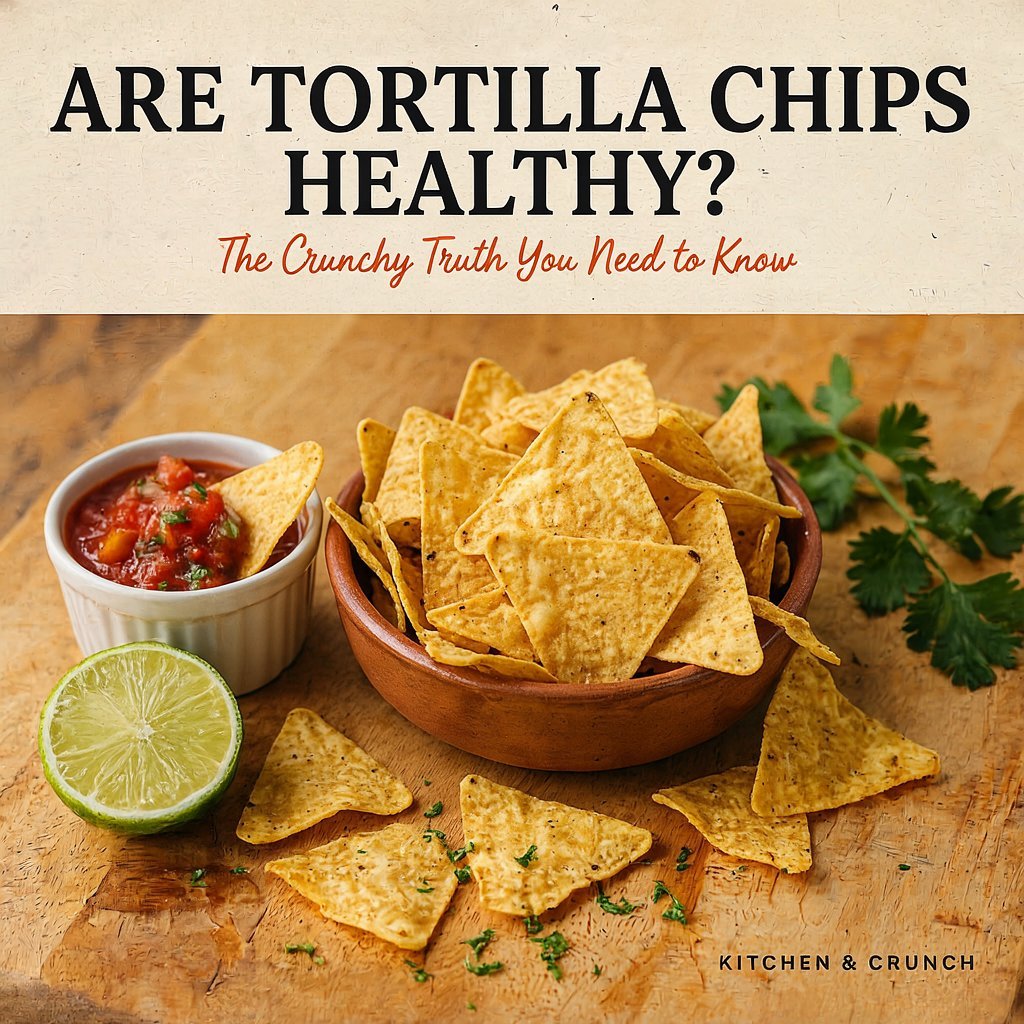
Table of Contents
ToggleIntroduction
Tortilla chips are the quintessential snack food. They are the star of the party platter, the perfect companion to a bowl of chili, and the essential scoop for creamy guacamole and zesty salsa. The combination of that satisfying crunch, the salty kick, and the versatility of dips makes them nearly irresistible. However, as you reach for that bag of golden triangles, a familiar question often surfaces: Are tortilla chips healthy?
The answer is not a simple “yes” or “no.” Like many foods, tortilla chips inhabit a grey area in the nutritional landscape. On one hand, they start with a simple base of corn, a whole grain. On the other hand, the process of frying them in oil and adding salt transforms them into a highly palatable food that can be dense in calories and fats. This article delves deep into the nutritional breakdown of tortilla chips, exploring the impact of preparation methods, portion sizes, and dips. We will uncover the “crunchy truth” about whether this beloved snack can find a place in a balanced, healthy diet or if it is a treat best enjoyed sparingly .
The Nutritional Breakdown: What is in a Standard Serving?
To determine if a food is “healthy,” we must first look at its nutritional profile. A standard serving of tortilla chips is generally defined as 1 ounce, which equates to approximately 10 to 15 chips, depending on the brand and thickness . Here is what you can expect to find in that serving:
Calories: 140–150
Total Fat: 7–8 grams (this is primarily the oil used in cooking)
Saturated Fat: ~1 gram
Sodium: Varies widely, from 85 mg in unsalted versions to over 200 mg in flavored varieties
Carbohydrates: 18–19 grams
Dietary Fiber: 1–2 grams
Protein: 2 grams
Based on these numbers, tortilla chips are undeniably calorie-dense. The calories primarily come from carbohydrates and fats, while they provide very little protein or significant vitamins and minerals . As one source notes, “tortilla chips are not a significant source of any vitamins or minerals” . The low fiber content is also a significant drawback, as fiber is crucial for promoting satiety (fullness) and stabilizing blood sugar levels. This combination—high in quick-digesting carbs and low in nutrients—means that eating them is a fast way to consume calories without feeling nourished .
The Good Side: Why Tortilla Chips Aren’t All Bad
While the numbers might look concerning, tortilla chips do possess a few redeeming qualities. First, they are made from corn, which is a whole grain. Whole grains are generally linked to better heart health and digestive function because they contain the entire grain kernel . Furthermore, because they are derived from corn, plain tortilla chips are naturally gluten-free, making them a safe snack option for individuals with celiac disease or gluten sensitivity .
Another positive aspect is the existence of healthier alternatives within the chip aisle. If you choose “baked” chips over the traditional fried versions, you can reduce the fat content by up to 50% . Additionally, some brands use healthier oils, such as avocado or olive oil, which are more stable when heated and contain heart-healthy monounsaturated fats . Products that use ingredients like sunflower oil or safflower oil and avoid artificial preservatives are also becoming more prevalent . For instance, a multi-grain option using stoneground organic corn, brown rice, and seeds offers a more nutrient-dense profile compared to standard white corn chips .
The Bad Side: The Downside of the Crunch
The negatives associated with tortilla chips stem primarily from how they are processed and consumed. The frying process is a major concern. When tortilla chips are fried, they absorb oils that are often high in omega-6 polyunsaturated fats. While a certain amount of omega-6 is essential, an overabundance relative to omega-3 fats can promote systemic inflammation in the body . The high-heat frying process can also generate compounds like advanced glycation end products and acrylamide, which have been linked to oxidative stress . Checking the ingredient list for “partially hydrogenated oils,” which indicate the presence of trans fats, is also critical, as these are particularly detrimental to heart health .
Sodium is another significant concern. While some brands offer lightly salted versions, the standard tortilla chip is heavily salted to enhance flavor. Excess sodium intake is a well-established risk factor for high blood pressure and cardiovascular issues . A typical serving might contain 150-200 mg of sodium, but flavored varieties can pack much more. Over 70 percent of the sodium Americans eat comes from packaged foods like these . Furthermore, the combination of salt, fat, and crunch makes tortilla chips “hyperpalatable,” meaning they are engineered to be highly rewarding to the brain, making it almost impossible to stop at a single serving .
The Dip Dilemma: Salsa, Guac, and Queso
When discussing the health of tortilla chips, the dip is an essential factor to consider. The healthiest option is fresh salsa (or pico de gallo). A serving of salsa contains mostly vegetables, providing a huge flavor payoff for very few calories—about 5 calories per ounce . It also offers vitamins like lycopene from tomatoes and a small bit of fiber .
Guacamole represents a more nutrient-dense choice. Avocados are rich in monounsaturated fats, which are beneficial for heart health, and the fat content can actually help slow the digestion of the chips, reducing the blood sugar spike .
However, trouble starts with creamy, cheese-based dips like queso or sour cream. These dips add significant calories, saturated fat, and sodium to your snack. A “dip trap” can easily turn a 150-calorie snack into a 500+ calorie meal without significantly increasing your fullness levels .
The Blood Sugar and Metabolism Impact
From a metabolic standpoint, tortilla chips are considered a high glycemic index food. The “glycemic index” measures how quickly a food raises blood glucose levels. With a glycemic index of 63 and a “glycemic load” of 11, a serving of tortilla chips can cause a noticeable spike in blood sugar within 30 to 60 minutes of consumption .
This spike triggers the pancreas to release insulin to bring the sugar levels down. However, because the chips have minimal fiber and protein to slow digestion, this insulin surge is often followed by a “crash” in blood sugar, which can trigger hunger and cravings for more carbohydrates . A clinical study comparing a snack of 250 calories of tortilla chips versus an equal-calorie serving of pecans found that the chips caused significantly higher spikes in blood glucose and insulin levels, while the nuts resulted in better postprandial (after-meal) profiles and higher levels of satiety hormones .
How to Eat Tortilla Chips the Smart Way
The evidence shows that tortilla chips are not a “health food,” but they don’t have to be a forbidden food either. The difference between a healthy habit and an unhealthy one often comes down to frequency and portion size . Here are actionable tips to incorporate them into your diet without derailing your health goals:
Control the Portion: This is the single most important factor. Never eat directly from the bag. Measure out a single serving (10-15 chips) into a small bowl and put the bag away. This prevents mindless overeating .
Choose Your Dip Wisely: Pair your chips with nutrient-dense dips like fresh salsa, pico de gallo, or a bean-based dip. If you use guacamole, use it in moderation due to its high-calorie density, but know the healthy fats it provides are beneficial .
Add Protein or Fat: To stabilize your blood sugar, pair your chips and salsa with a source of protein, such as a few slices of cheese, a handful of almonds, or even a hard-boiled egg. This helps slow digestion and improves satiety .
Read the Ingredient List: Look for chips with the shortest and most recognizable ingredient lists. Ideally, they should contain only corn, a healthy oil (like avocado, olive, or sunflower), and salt. Avoid anything with “partially hydrogenated oils” or artificial flavors and colors .
Consider Baked or Alternative Options: Choose baked corn chips or explore alternatives made from chickpeas, lentils, or sorghum. These often offer more fiber and protein .
Watch the Frequency: Enjoying chips at a party or during a weekly movie night is perfectly fine. Making them a daily evening habit is where they can undermine your health goals .
Conclusion
So, are tortilla chips healthy? The honest answer is that they are neutral. They are not a “superfood” that will nourish your body, nor are they a “poison” that will ruin your health in a single sitting. They are a simple corn product that, when fried and salted, becomes a calorie-dense, low-nutrient food that is easy to overeat.
However, with mindful strategies—controlling your portions, selecting baked options, choosing healthy dips, and reading labels—tortilla chips can absolutely have a place in a balanced diet. The key is to treat them as a treat, an occasional snack rather than a dietary staple. The healthiest people aren’t the ones who never eat chips; they are the ones who can enjoy a handful and stop. Enjoy the crunch, but let mindfulness be the guide that keeps your health goals on track.
Frequently Asked Questions (FAQ)
1. Are tortilla chips healthier than potato chips?
Generally, yes. Tortilla chips are often lower in fat and calories than potato chips. However, both are high in sodium and calories, so the difference is not significant enough to make tortilla chips a “health food.” The primary difference lies in the base ingredient: corn versus potato .
2. Are tortilla chips bad for weight loss?
They can be, but they don’t have to be. A 150-calorie serving of chips and salsa can fit into a weight-loss plan. The danger is overeating. Restaurants often serve three to four servings in a single basket, which can easily add 400-600 calories to a meal .
3. Are baked tortilla chips a healthier choice?
Yes. Baked tortilla chips can reduce fat content by 30-50% compared to fried versions. However, be aware that some brands may add extra salt or starches to compensate for flavor. Always check the nutrition label .
4. Are blue corn tortilla chips healthier than white or yellow corn chips?
Blue corn chips are sometimes slightly higher in antioxidants and protein than their white or yellow counterparts. However, the difference is minimal. The preparation method (baked vs. fried) and the oil used have a far greater impact on health than the color of the corn .
5. What is the healthiest dip for tortilla chips?
Fresh salsa or pico de gallo is the healthiest choice, as it is low in calories and rich in vitamins. Guacamole is also a good choice because it provides healthy fats and nutrients, though you should still watch your portion size due to its calorie density .
6. Can people with diabetes eat tortilla chips?
Yes, but with caution. Portion control is critical. A serving of chips (18-19g carbs) should be treated as a carbohydrate exchange. Pairing the chips with protein and fat—like guacamole or cheese—can help blunt the blood sugar spike .

adidas Protour 3.4 Backpack: Complete Guide, Features, Size and Review
2025 Hyundai Palisade: Complete Guide to Features, Performance, Interior, and Pricing

Half-Kneeling Hip Flexor Stretch: Benefits, Proper Form, and How to Do It

Randy Jurado Ertll: A Voice for the Voiceless and the Magic of Salvadoran Storytelling

The Ultimate Guide to the Film “Safe Haven” (Тихая гавань) 2013: A Deep Dive into the Romantic Thriller

Conquering the ʻAihualama Trail: Your Ultimate Guide to Oahu’s Hidden Rainforest Gem
Trending
 Entertainment3 months ago
Randy Jurado Ertll: A Voice for the Voiceless and the Magic of Salvadoran Storytelling
- Entertainment4 months ago
The Ultimate Guide to the Film “Safe Haven” (Тихая гавань) 2013: A Deep Dive into the Romantic Thriller
- Nature4 months ago
Conquering the ʻAihualama Trail: Your Ultimate Guide to Oahu’s Hidden Rainforest Gem
- Travel4 months ago
Conquering the Makapuʻu Tide Pools: A Guide to Oahu’s Hidden Volcanic Gems
- Business4 months ago
Workflowy Templates: The Ultimate Guide to Mastering Productivity in 2026
- Business4 months ago
The Definitive Guide to WXXM Madison: From Progressive Talk to Rewind 92.1
- Fashion4 months ago
Baddie Hub: The Rise of the Internet’s Confidence-Driven Aesthetic Culture in 2026
- Fashion4 months ago
Caleb Goddard: The Diplomat Who Redefined Legacy Beyond Hollywood’s Spotlight