
Animal
Python 54axhg5: Debunking the Myth and Mastering Elusive Python Bugs

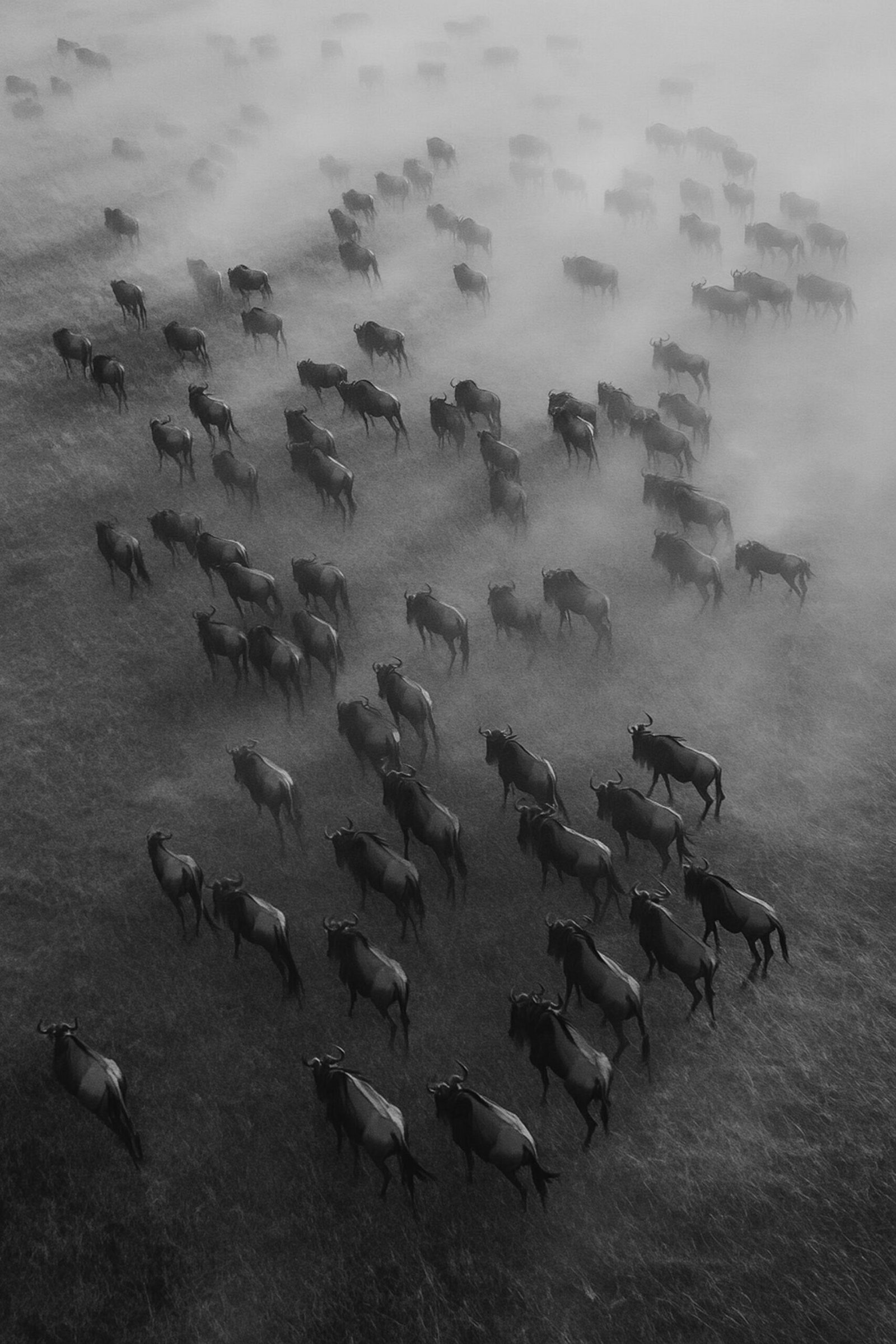
There is a profound power in the collective. Across the animal kingdom, from the vast plains of Africa to the forgotten corners of the natural world, the concept of “the herd live” serves as a fundamental blueprint for survival, social structure, and success. This is not merely a biological observation; it is a philosophical and cultural touchstone that resonates with human society as well. Whether it is the majestic herd of wild buffalo thundering across the plains, a group of giraffes moving silently through the savannah, or the human desire to “join the herd” in a social or musical sense, the dynamics of group living offer a rich tapestry of meaning. This article explores the multifaceted concept of “the herd live,” examining its biological imperatives, its grammatical intricacies, and its cultural representations, from classic rock to modern film.
The phrase itself carries significant weight, often misunderstood due to the nuances of collective nouns. When we ask, “Does a herd of giraffes live or lives on the manor?” we are diving into the fascinating split between American and British English. In American English, the collective noun “herd” is almost always treated as a singular entity, leading to the phrase “the herd lives.” This linguistic choice emphasizes the group as a single, unified organism moving and acting in concert . However, in British English, it is equally correct to treat the herd as a plural, acknowledging the individual members within the whole: “the herd live” . This grammatical distinction mirrors the biological reality: while a herd functions as a unit, its strength is derived from the individuals who compose it, each playing a role in the collective’s survival.
Understanding “the herd live” extends far beyond grammar. It is a lens through which we can view survival strategies. The instinct to band together is one of nature’s most effective defenses against predators . When animals live in a herd, they benefit from the “many eyes” effect, reducing the risk of surprise attacks and increasing the chances of detecting threats early. This is why we see such a diverse array of group behaviors in the wild, from the complex social structures of elephants to the synchronized movements of schooling fish—though, technically, fish school rather than herd, demonstrating the specificity of the term “herd” .
Key Keywords for This Article
The Herd Live
Herd Lives vs. Herd Live
Collective Noun
Animal Group Behavior
The Herd Band
Herd Survival
Nostalgia and Relevance
Human Society and Herd Mentality
The Biological Imperative of Herd Living
The primary driver behind why animals choose to “live in a herd” is survival. For prey species, safety in numbers is the most reliable strategy against predation. A solitary zebra is a target; a herd of zebras is a complex, moving tapestry that confuses and deters predators. This behavior is not simply about being close together; it involves intricate communication and social bonds. Recent literature, such as the children’s book “I’m Joining the Herd,” highlights this by exploring how various animal groups—from lion prides to giraffe herds—work together to protect young, find food, and navigate their environment . Giraffes, for example, have been shown to hum to communicate with their herd, a subtle interaction that reinforces group cohesion . The herd acts as a social unit, a family where individuals clean each other, play, and look after one another’s young.
Moreover, herd living optimizes resource utilization. Foraging in a herd allows animals to cover more ground and find food sources more efficiently. The concept of “herd live” thus becomes a dynamic equation of risk versus reward. While living in a large group increases competition for resources, the collective benefit of enhanced protection and shared knowledge often outweighs the costs. This is a classic example of evolutionary adaptation, where the social structure of the herd is honed to maximize the survival prospects of the species as a whole. The phrase “the herds live on land managed by different federal agencies” highlights the contemporary conservation challenges of maintaining these vital social structures in the modern world .
The Cultural Resonance of “The Herd”
Beyond the wild, the concept of the herd has profound cultural and social implications. “Herd mentality” is a well-known term describing how people can be influenced by their peers to adopt certain behaviors, follow trends, or make decisions. While often used pejoratively to describe a lack of independent thought, this human tendency is rooted in the same primal instincts that drive animals to band together: the search for safety and belonging. This is where the phrase “I’m joining the herd” takes on a metaphorical meaning. It signifies an individual’s decision to align with a group, a family, or a community, recognizing the strength and comfort that comes from collective identity .
However, the concept of “the herd live” is also a powerful cultural artifact for groups that have been labeled as outsiders, such as the rock band “The Herd.” Historically, the 1960s band “The Herd” is a quintessential symbol of the era’s “pop” scene. Their live sessions for the BBC, now collected on albums like “Live On Air 1967-1969,” reveal a charisma and taste often missing from their commercial recordings. This music allows listeners to enjoy the “other side of one of British music’s best-dressed and undeniably underrated groups” . The energy and raw talent captured in these live sessions demonstrate that “the herd live” is more than a passive state of existence; it is an active, vibrant performance of collective energy. The nostalgia felt by fans decades later proves that the music “still has something urgent to say” .
Similarly, Australian hip-hop collective “The Herd” proves that the power of a group extends to the political and social commentary of the modern era. Celebrating 20 years of their landmark album “The Sun Never Sets,” they demonstrate that “nostalgia and relevance can coexist” . Their live performances highlight how a group can unify people around a shared history and a message of change. The collective energy of the band and the audience—a “herd” of its own—shows that the term can represent solidarity, resilience, and a shared journey through challenging times, tackling difficult themes and sparking conversation through music .
Herd Dynamics in Modern Media
The theme of “the herd live” is not confined to biology or music; it is a central theme in modern storytelling. The 2025 Netflix thriller “The Herd” uses the concept of a “herd” as a metaphor for societal division and conflict in Nigeria . The film explores the dark side of tribalism and stereotyping, portraying a world where bandits use the guise of cattle herders to commit acts of violence, ultimately fueling ethnic controversies. In this context, the herd represents a complex and fractured society where different groups—Yoruba, Igbo, Fulani—are forced to confront deep-seated prejudices . The film asks a difficult question: does the “herd” represent a unified community, or is it a collection of warring factions co-existing in a precarious state?
The film’s director argues that the narrative shows “evil and corruption cut across everywhere, not pinned to one tribe or religion.” Yet, the raw depictions of violence and the use of specific ethnic signifiers in the film sparked significant backlash, with some viewers calling for a boycott. This controversy highlights the dangers of “herd mentality” in the public sphere: when people feel their group is misrepresented, they “band together” in protest, sometimes missing the nuanced message the storyteller intended. The film serves as a case study for how “the herd live” concept interacts with modern identity politics, showing that while the human urge to belong to a group is powerful, it can also be a source of profound conflict .
In stark contrast to the grim realism of the Netflix thriller, the video game Herdling offers a more hopeful and empathetic take on herd dynamics. This meditative indie game, compared to titles like “Journey” or “Abzû,” tasks the player with guiding a herd of creatures called Calicorns through a beautifully desolate world . The game’s genius lies in its simplicity; the player is not a commander but a caretaker. The Calicorns have their own personalities, often ignoring commands or wandering off, forcing the player to adapt and nurture . This experience is a physical embodiment of the phrase “the herd live.” It isn’t about dictating terms to the group; it’s about earning their trust, understanding their individual quirks, and moving together not by force, but by persuasion. As the review states, “I wasn’t thinking about frame rates… I was thinking about my herd. Would they all make it? Would I fail them?” .
Conclusion
The concept of “the herd live“ is a powerful, multifaceted idea that transcends the boundaries of grammar, biology, and culture. From the meticulous grammatical rules of collective nouns to the life-or-death survival strategies of the African savannah, the idea of the herd shapes how we understand groups in the natural world. It is a term of unity, protection, and shared purpose.
Culturally, “the herd live” manifests in music, film, and art, symbolizing both the best and worst of human nature. The rock nostalgia of “The Herd” and the political energy of the Australian hip-hop collective show that a group can be a source of artistic brilliance and social change. Conversely, films like “The Herd” and the psychology of “herd mentality” warn us of the dangers of blind conformity and the ease with which group identity can be weaponized.
Ultimately, whether we are discussing zebras, long-lost rock stars, or the complexities of modern society, “the herd live” is a reminder that we are rarely alone. Our survival and our identity are intrinsically linked to the groups we belong to. The challenge is to live within the herd—to participate in its collective strength—while maintaining the individuality that makes the whole greater than the sum of its parts.
Frequently Asked Questions (FAQ)
1. Is it grammatically correct to say “a herd live” or “a herd lives”?
Both forms are grammatically correct, but their usage depends on the variety of English being spoken. In American English, collective nouns like “herd” are almost always treated as singular, so you would say “the herd lives.” In British English, it is common and correct to use plural verbs with collective nouns to emphasize the individual members of the group, hence “the herd live” .
2. What is the primary benefit for animals that “live in a herd”?
The primary benefit of herd living is survival. Herds offer protection from predators through the “many eyes” effect, making it harder for an individual to be singled out. Additionally, herding allows for efficient foraging, better navigation, and complex social interactions that support the raising of young .
3. Are there other types of animal groups besides “herds”?
Yes, the animal kingdom uses a rich vocabulary to describe different social groups. The specific terms often depend on the species and behavior. For example, birds often live in flocks, fish form schools, lions live in prides, and bats gather in cauldrons . These terms are specific to the behavior and species of the animals involved .
4. What does “joining the herd” mean in a metaphorical sense?
Metaphorically, “joining the herd” refers to an individual’s decision to align themselves with a larger group, community, or trend. It can imply a search for belonging, safety, or shared purpose. While it can be negative if it implies a loss of independent thought, it often simply describes the human need for social connection and community.
5. What are “The Herd” bands mentioned in this article?
The article discusses two notable music groups named The Herd. The first is a British pop band from the 1960s known for their BBC sessions, which are collected on albums like “Live On Air 1967-1969” . The second is an Australian hip-hop collective who celebrated 20 years of their influential album “The Sun Never Sets” in 2025 .
6. Why is the film “The Herd” (2025) controversial?
The film is controversial because it tackles the sensitive issue of insecurity and ethnic tensions in Nigeria. Specifically, it portrays armed bandits posing as Fulani cattle herders to commit crimes. This depiction sparked accusations of ethnic stereotyping, with some critics arguing it unfairly links a specific group to terrorism and kidnappings, potentially inflaming real-world tensions .



Wasy Jet: Complete Guide to easyJet Flights, Destinations, Baggage and Travel Tips

Preeti Young: Biography, Career, TV Appearances and Online Presence

Best Tarta de Choclo Near Me: A Complete Guide to Finding Authentic Corn Tart

Randy Jurado Ertll: A Voice for the Voiceless and the Magic of Salvadoran Storytelling

The Ultimate Guide to the Film “Safe Haven” (Тихая гавань) 2013: A Deep Dive into the Romantic Thriller

The Definitive Guide to WXXM Madison: From Progressive Talk to Rewind 92.1
 Entertainment2 months ago
Randy Jurado Ertll: A Voice for the Voiceless and the Magic of Salvadoran Storytelling
- Entertainment2 months ago
The Ultimate Guide to the Film “Safe Haven” (Тихая гавань) 2013: A Deep Dive into the Romantic Thriller
- Business2 months ago
The Definitive Guide to WXXM Madison: From Progressive Talk to Rewind 92.1
- Business2 months ago
Workflowy Templates: The Ultimate Guide to Mastering Productivity in 2026
- Fashion2 months ago
Baddie Hub: The Rise of the Internet’s Confidence-Driven Aesthetic Culture in 2026
- Travel2 months ago
Conquering the Makapuʻu Tide Pools: A Guide to Oahu’s Hidden Volcanic Gems
- Nature2 months ago
Conquering the ʻAihualama Trail: Your Ultimate Guide to Oahu’s Hidden Rainforest Gem
- Sports2 months ago
The Ultimate Guide to the “104.7 Contest”: How to Win Big and Master the Rules