
Gaming
The Ultimate Guide to “Crazy 8”: From Classic Card Game to Cultural Phenomenon



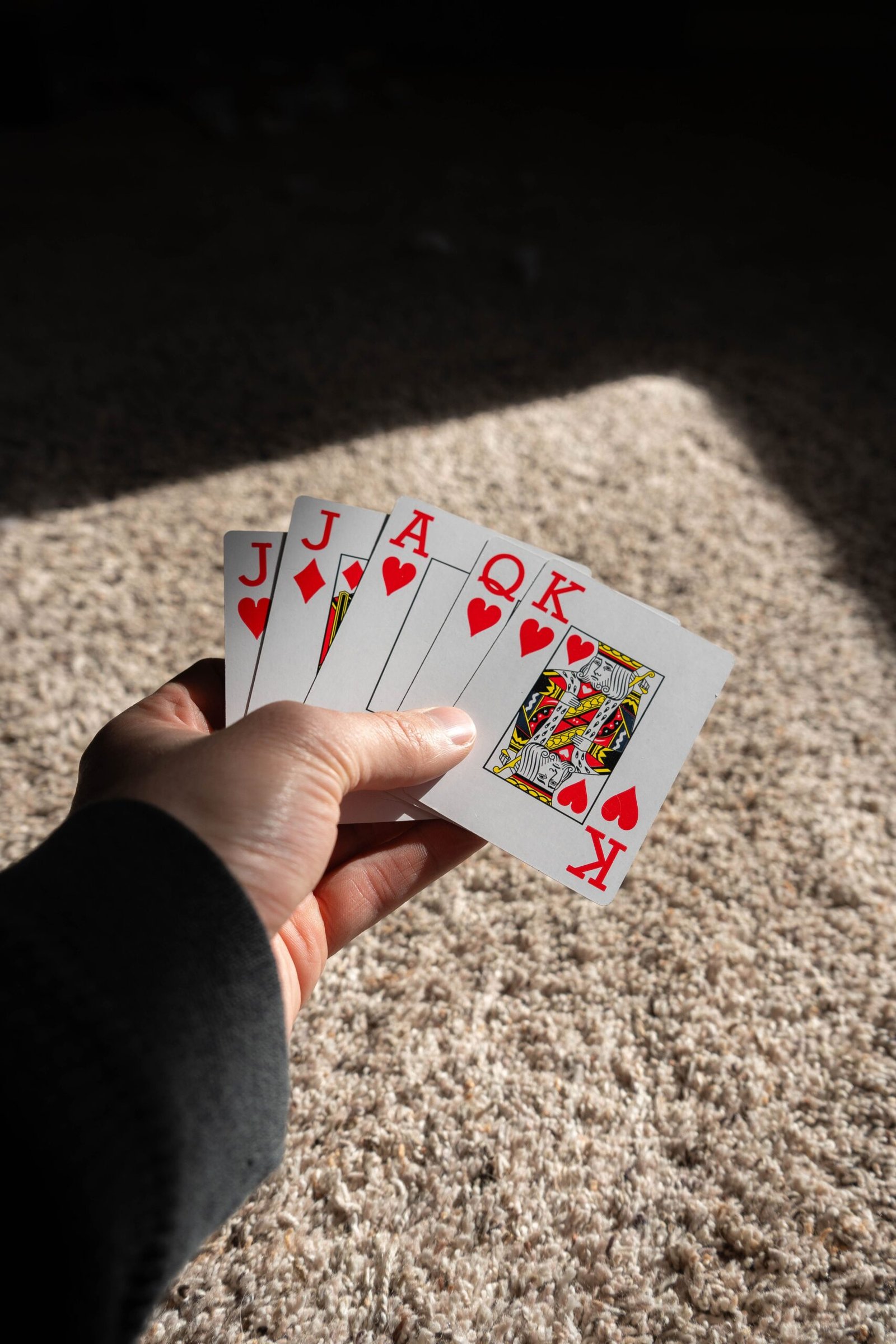

In a world overflowing with complex board games featuring elaborate rulebooks, endless setup times, and strategic depth that can take hours to master, there is something refreshingly simple about a game that fits in a small box and takes under a minute to explain. Left Right Center, often abbreviated as LCR or LRC, is exactly that kind of game—a pure-chance dice game that has become a beloved staple at family gatherings, holiday parties, casino nights, and casual get-togethers across the country. What makes this game so special is not just its simplicity but its incredible versatility; it can be played with poker chips, dollar bills, candy, or even small wrapped gifts, making it adaptable to virtually any occasion or group . Since its official release in 1992 by George & Company, LLC, Left Right Center has grown from a pub favorite into a mainstream phenomenon that brings people together through laughter, suspense, and the shared thrill of watching fortunes change with every roll of the dice . Whether you are hosting a Christmas Eve celebration, looking for a fun activity at a family reunion, or simply searching for an engaging game that requires zero skill and maximum fun, Left Right Center delivers an experience that keeps players on the edge of their seats until the very last chip is won.
What Is Left Right Center and Why Is It So Popular
Left Right Center is a dice game that operates entirely on chance, with no decision-making or strategy involved whatsoever . Each player starts with an equal number of chips or tokens, typically three, and on their turn rolls a number of dice equal to the number of chips they possess, up to a maximum of three dice. The special LCR dice have six sides, with three sides marked with a single dot, and the remaining three sides marked with the letters L, C, and R respectively . When a player rolls the dice, they must follow the instructions dictated by the dice: an L means pass one chip to the player on their left, an R means pass one chip to the player on their right, a C means place one chip into the center pot which removes it from play, and a dot means the player keeps their chip . The game continues with players taking turns in clockwise order until only one player remains with any chips, at which point that player wins the entire center pot .
The popularity of Left Right Center can be attributed to several key factors that make it uniquely suited for modern social gatherings. First, the game requires absolutely no skill or decision-making, which levels the playing field completely and means that anyone—from young children to elderly grandparents—can participate and have an equal chance of winning . Second, the game is incredibly fast-paced, with rounds typically lasting no more than ten to fifteen minutes depending on the number of players, making it perfect for maintaining high energy levels and allowing multiple rounds to be played in a single sitting . Third, the equipment requirements are minimal; all you need are three special LCR dice and some form of chips or tokens, both of which are highly portable and can be easily transported to any location . Fourth, the game’s flexibility in terms of stakes makes it suitable for any occasion; you can play for pennies, dollar bills, poker chips, candy, or even wrapped gifts, allowing you to adjust the intensity and engagement level to match your group’s preferences . Finally, the unpredictable nature of the dice creates moments of genuine suspense and excitement as players watch their chips disappear, reappear through passes from neighbors, and accumulate in the center pot, with the entire game potentially turning on a single roll .
The Complete Rules and How to Play Left Right Center
Before diving into gameplay, you must ensure you have the proper equipment to play Left Right Center. The official LCR game set includes three specially marked six-sided dice featuring one L, one C, one R, and three dots, along with twenty-four playing chips and a set of instructions . If you do not have access to official LCR dice, you can still play using standard six-sided dice by assigning specific numbers to represent the actions: numbers one through three can function as dots, meaning you keep your chips; number four represents the L, requiring you to pass a chip to your left; number five represents the C, requiring you to place a chip in the center; and number six represents the R, requiring you to pass a chip to your right . While this adaptation works, it is not as elegant or quick to discern as using the specially marked dice, so investing in an official set is recommended for the best experience .
To set up the game, gather at least three players, though the game can accommodate as many people as you can fit around a table, making it ideal for both small groups and large parties . Each player receives three chips, dollar bills, or tokens of equal value, and a center pot or bowl is placed in the middle of the playing area to collect chips when a C is rolled . The game begins with the first player rolling all three dice; if they have fewer than three chips, they roll only the number of dice corresponding to their chip count . For example, a player with two chips would roll two dice, while a player with one chip would roll just one die. If a player loses all their chips, they are not immediately eliminated from the game; instead, they skip their turns until another player passes them a chip, at which point they are back in the action and can roll again on their next turn . This mechanic keeps all players engaged throughout the game and prevents early elimination from ruining the fun.
The gameplay continues clockwise around the table, with each player rolling their dice and following the instructions displayed. The ideal roll is three dots, which means you keep all three of your chips and suffer no losses . The worst-case scenario is rolling L, R, and C on a single turn, which would require you to pass one chip to your left, one chip to your right, and place one chip in the center pot, effectively losing all three chips in a single turn . The game progresses until only one player has chips remaining, and that player is declared the winner and collects the entire center pot . It is important to note that if a player who has been eliminated receives a chip from a neighbor, they are brought back into the game and can resume rolling on their next turn, which adds an additional layer of excitement and unpredictability as players can re-enter the competition at any moment .
Playing Left Right Center with Money, Dollar Bills, and Real Stakes
One of the most popular variations of Left Right Center involves playing with real money, particularly dollar bills, which adds an exciting financial dimension to the game and raises the stakes for all participants . When playing for money, the most common approach is to give each player three one-dollar bills at the start of the game, though some groups prefer higher denominations such as five-dollar bills or even twenty-dollar bills for more intense sessions . The rules remain identical to the standard chip version, but instead of passing poker chips, players physically hand dollar bills left and right or place them into the center pot, which becomes the prize for the eventual winner . This version is particularly popular during holiday gatherings and family parties because the financial stakes create genuine excitement and engagement while still keeping the cost relatively low if you stick to one-dollar bills .
When playing with money, it is essential to establish clear ground rules before starting to ensure smooth gameplay and avoid confusion. First, agree on the denomination of bills everyone will use and ensure each player starts with exactly the same amount . Second, designate a central pot or bowl where players will place bills when they roll a C, and make sure it is clearly visible to everyone to maintain transparency . Third, consider whether the winner takes the entire center pot or if you will split it in some way, though the traditional rule is winner takes all . Fourth, be aware of the logistical challenges that can arise when passing dollar bills, especially as players with different denominations might not have exact change; many players recommend using dollar bills exclusively to simplify the process . Some groups prefer to use poker chips throughout the game and then convert chips to cash at the end, which eliminates the need to physically pass bills back and forth during play .
Using money in Left Right Center introduces an interesting psychological element that makes the game even more engaging. Players become visibly invested when real money is on the line, and the stakes of each roll feel genuinely meaningful . The game can also serve as a fun icebreaker at parties or a bonding activity for families, as the shared experience of watching money move around the table creates memorable moments and friendly competition . However, players should always play responsibly and ensure that the financial stakes remain comfortable for everyone involved. For families with children or groups that prefer not to gamble with real cash, the money version can easily be adapted by using candy, small toys, or other non-monetary tokens that still provide a sense of value and reward . Ultimately, the money variation of Left Right Center offers all the same fun and excitement of the original game with an added layer of intensity that makes each roll feel even more consequential.
The Christmas Gift Exchange Variation of Left Right Center
During the holiday season, Left Right Center transforms into one of the most beloved Christmas party games, with a creative gift exchange variation that combines the excitement of dice rolling with the joy of giving and receiving presents . In this festive adaptation, players bring small, wrapped gifts of roughly equal value instead of chips or money, and each participant starts with three gifts or three tokens that represent their gifts . The dice determine the movement of these gifts exactly as they would with chips: rolling an L means pass a gift to the player on your left, rolling an R means pass a gift to your right, rolling a C means place a gift in the center pile, and rolling a dot means you keep the gift . The game continues until one player has all the gifts, winning the entire center pile, though many groups choose to set a timer and have the player with the most gifts when time expires take the pot .
What makes the Christmas Left Right Center variation particularly special is the creative storytelling element that many groups incorporate to make the game more engaging and festive. Instead of simply rolling dice and passing gifts mechanically, some hosts create a Christmas narrative that is read aloud to the group, with specific words triggering gift-passing actions . For example, the story might describe the wise men traveling left at a star, which signals everyone to pass a gift to their left, or mention that the stable was on the right, prompting a pass to the right . When the story describes something being given or shared in a central location, players place a gift in the center pile . This narrative approach transforms a simple dice game into an interactive storytelling experience that captivates players of all ages and adds a uniquely festive atmosphere to holiday gatherings . The surprise of not knowing which gifts you will end up with, combined with the anticipation of seeing which presents land in the center pot, creates genuine excitement and laughter around the Christmas table.
The Christmas version of Left Right Center has become particularly popular because of its simplicity, inclusivity, and the way it brings families together during the holiday season. Even elderly relatives and young children can participate equally since no skill or strategy is involved, and the game naturally creates moments of shared joy and laughter . Many families have made Left Right Center a cherished Christmas Eve tradition, with some incorporating additional rules such as allowing players to bring multiple gifts for multiple rounds or setting rules for what types of gifts are appropriate . The game also works well as a white elephant gift exchange alternative, as it eliminates the need for stealing gifts and instead lets the dice determine the distribution, reducing potential conflicts and ensuring everyone has fun . For families looking to add new traditions to their holiday celebrations, Left Right Center offers a perfect combination of simplicity, engagement, and festive spirit that keeps everyone entertained.
Strategies, Probability, and Understanding the Odds in Left Right Center
While Left Right Center is fundamentally a game of pure chance with no strategic decisions to make during play, understanding the underlying probability can enhance your appreciation of the game and help you grasp why certain outcomes are more likely than others . Each LCR die has six sides: one L, one C, one R, and three dots . This means that on any given roll of a single die, there is a fifty percent chance of rolling a dot, which results in keeping your chip, and a fifty percent chance of rolling an L, C, or R, which results in losing the chip in some way . The probability of rolling all three dice and getting dots on all of them is fifty percent multiplied by fifty percent multiplied by fifty percent, which equals 12.5 percent, meaning that approximately one in eight turns will result in a perfect roll where you keep all three chips . Conversely, the probability of rolling an L, R, and C in a single turn, losing all three chips at once, is also 12.5 percent, calculated as one-sixth times one-sixth times one-sixth times six possible combinations, which equals 2.78 percent, making it relatively rare but still possible .
The statistical analysis of Left Right Center reveals some fascinating patterns that contradict common intuitions about the game. Since rolling a dot is the only favorable outcome and the game mechanics always involve passing chips or placing them in the center, players might assume that going first is advantageous because they have more opportunities to roll. However, simulation studies have shown that the opposite is actually true: going first is statistically disadvantageous because players who roll earlier are more likely to lose their chips before receiving passes from neighbors . In a ten-player game simulated over ten million rounds, the first player had the lowest win rate, while the seventh and eighth players had the highest win rates, demonstrating that later positions in the turn order actually offer a slight statistical advantage . This counterintuitive finding is explained by the fact that earlier players have more opportunities to roll and lose chips before receiving passes, while later players benefit from receiving chips from earlier players’ losses before they have to roll themselves . The simulation also found that the players in the first half of the turn order generally performed worse than the players in the second half, with the middle positions within each half showing the most extreme biases .
The probability analysis of Left Right Center also reveals important insights about chip flow and game dynamics that can help players understand the game’s rhythm. Center faces on the dice are particularly significant because when a chip is placed in the center, it is permanently removed from the game and cannot return to circulation, which gradually reduces the total number of chips in play and accelerates the game’s progression . This means that even though L, R, and C each appear only once on the die, the C result has a more significant long-term impact because it permanently removes chips from the game, whereas L and R results simply move chips between players . The expected number of chips a player will lose in a single turn depends on the number of dice they roll, with a player rolling three dice expected to lose approximately 1.5 chips per turn, while a player with two dice is expected to lose one chip, and a player with one die expected to lose half a chip . This progressive reduction in chips as the game continues creates a natural acceleration toward the game’s conclusion, with the final stages often producing dramatic swings as players with just one or two chips roll for survival.
Conclusion
In an era where entertainment options are increasingly complex and demanding, Left Right Center stands as a refreshing testament to the enduring appeal of simple, accessible fun. This dice game, which requires nothing more than three special dice and a handful of chips to play, has earned its place as a beloved staple of game nights, family gatherings, and holiday celebrations across the country. Its genius lies not in strategic depth or complex mechanics but in its ability to bring people together through shared suspense and laughter, creating moments of genuine connection that transcend the game itself . Whether you choose to play with poker chips, dollar bills, or festive wrapped gifts, the core experience remains the same: a fast-paced, unpredictable journey where fortunes change with every roll and anyone can emerge victorious regardless of age or experience .
The versatility of Left Right Center ensures that it can be adapted to virtually any occasion or group, from casual family game nights to high-stakes betting sessions to heartwarming Christmas gift exchanges . The game’s pure-chance nature means that it is truly inclusive, allowing everyone from young children to elderly grandparents to participate on equal footing, making it an ideal activity for multigenerational gatherings . The addition of the Christmas narrative version has elevated the game to new levels of festive fun, creating interactive storytelling experiences that captivate players and become cherished holiday traditions . Meanwhile, the money version adds an exciting financial dimension that heightens engagement and creates memorable moments of triumph and suspense . As the game continues to grow in popularity, with official LCR sets selling in increasing numbers and the game being discovered by new generations of players, its status as a quintessential party game seems assured for years to come.
If you have not yet experienced the joy of Left Right Center, there has never been a better time to start. Gather your friends and family, acquire or adapt some dice, choose your preferred version, and prepare for an evening of unpredictable fun. The game takes less than a minute to explain, requires no setup time, and can be played in rounds that fit any schedule . Whether you are looking for a way to liven up a quiet evening, add excitement to a holiday party, or simply spend quality time with loved ones, Left Right Center delivers an experience that is at once simple and endlessly entertaining. In a world of increasingly complicated entertainment, sometimes the simplest games are the ones that bring us the most joy, and Left Right Center is proof that a few dice and some chips are all you need for a truly memorable time.
Frequently Asked Questions
What is the Left Right Center game?
Left Right Center, commonly known as LCR or LRC, is a fast-paced dice game where players pass chips or tokens to the left, right, or into a center pot based on their dice rolls. The last player with chips remaining wins the entire center pot . The game requires no skill or strategy, making it accessible to players of all ages .
How many people can play Left Right Center?
Left Right Center requires a minimum of three players, but there is virtually no maximum limit, making it perfect for both small gatherings and large parties . The game works best with three to six players, though it can easily accommodate more people as long as everyone can comfortably reach their neighbors and the center pot .
What do I need to play Left Right Center?
To play Left Right Center, you need three specially marked six-sided dice featuring L, C, R, and dot symbols, along with chips, tokens, dollar bills, or other items to pass between players . If you do not have official LCR dice, you can use standard six-sided dice by assigning numbers to represent the actions .
Can I play Left Right Center with regular dice?
Yes, you can play Left Right Center with standard six-sided dice by using the following key: numbers one, two, and three represent dots (keep your chip), number four represents L (pass left), number five represents C (place in center), and number six represents R (pass right) . However, using official LCR dice is recommended for easier gameplay .
How do you win at Left Right Center?
You win Left Right Center by being the last player with chips remaining when all other players have lost their chips . When only one player has chips left, they collect the entire center pot . Players who lose all their chips are not immediately eliminated and can re-enter the game if they receive chips from neighbors .
What is the Left Right Center Christmas game?
The Left Right Center Christmas game is a holiday variation where players use small wrapped gifts instead of chips . Players pass gifts left, right, or to a center pile based on their dice rolls, and the last person with gifts wins the entire center pile . Some groups incorporate a festive story that cues gift-passing actions, making it more interactive and engaging .
What does C mean in Left Right Center?
In Left Right Center, C stands for Center. When a player rolls a C, they must place one of their chips into the center pot, which permanently removes that chip from the game . The center pot grows throughout the game and is collected by the eventual winner .
What are the odds in Left Right Center?
Each die in Left Right Center has a fifty percent chance of rolling a dot, which means you keep your chip, and a fifty percent chance of rolling an L, C, or R, which means you lose your chip in some way . The probability of rolling all dots on three dice is 12.5 percent, while rolling an L, R, and C in a single turn is approximately 2.78 percent . Simulation studies have shown that players in later turn positions have a slight statistical advantage over earlier players .
Do you need special dice for Left Right Center?
While you can adapt standard dice to play Left Right Center, special LCR dice are recommended because they make the game faster and easier to play . Official LCR dice have L, C, R, and dot symbols printed directly on their faces, eliminating the need to remember number-to-action conversions . The official game set also includes twenty-four playing chips and instructions .

adidas Protour 3.4 Backpack: Complete Guide, Features, Size and Review
2025 Hyundai Palisade: Complete Guide to Features, Performance, Interior, and Pricing

Half-Kneeling Hip Flexor Stretch: Benefits, Proper Form, and How to Do It

Randy Jurado Ertll: A Voice for the Voiceless and the Magic of Salvadoran Storytelling

Conquering the ʻAihualama Trail: Your Ultimate Guide to Oahu’s Hidden Rainforest Gem

The Ultimate Guide to the Film “Safe Haven” (Тихая гавань) 2013: A Deep Dive into the Romantic Thriller
 Entertainment4 months ago
Randy Jurado Ertll: A Voice for the Voiceless and the Magic of Salvadoran Storytelling
- Nature4 months ago
Conquering the ʻAihualama Trail: Your Ultimate Guide to Oahu’s Hidden Rainforest Gem
- Entertainment4 months ago
The Ultimate Guide to the Film “Safe Haven” (Тихая гавань) 2013: A Deep Dive into the Romantic Thriller
- Travel4 months ago
Conquering the Makapuʻu Tide Pools: A Guide to Oahu’s Hidden Volcanic Gems
- Business4 months ago
Workflowy Templates: The Ultimate Guide to Mastering Productivity in 2026
- Business4 months ago
The Definitive Guide to WXXM Madison: From Progressive Talk to Rewind 92.1
- Fashion4 months ago
Baddie Hub: The Rise of the Internet’s Confidence-Driven Aesthetic Culture in 2026
- Sports4 months ago
The Ultimate Guide to Jungle Ball: Rules, Culture, and Legacy of Basketball’s Most Intense Game